
Understanding Light Pollution: A Comprehensive Guide
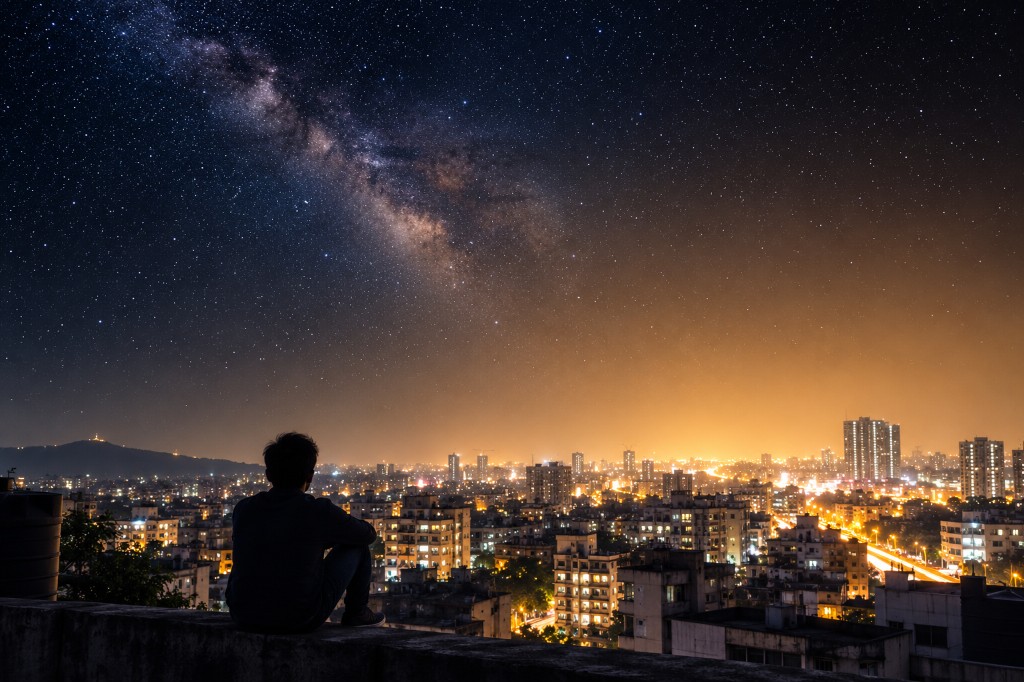
Look up at the night sky from any Indian city. If you are lucky, you might see a few dozen stars. Step outside the city limits, and the count rises to a few hundred. Travel to a truly dark location — a remote village in the Western Ghats, the deserts of Rajasthan, or the mountains of Ladakh — and you will be stunned to see thousands of stars, the luminous band of the Milky Way, and perhaps even the faint glow of distant galaxies.
The difference? Light pollution.
What Is Light Pollution?
Light pollution is the excessive, misdirected, or obtrusive use of artificial light at night. It is not simply "too much light" — it is light that serves no useful purpose. A streetlight that shines upward into the sky wastes energy and creates skyglow. A security floodlight that blazes all night across a parking lot creates glare that actually reduces visibility. A neighbor's porch light that floods your bedroom window is light trespass.
The International Dark-Sky Association identifies four components of light pollution:
- Skyglow: The brightening of the night sky over populated areas, caused by the scattering of artificial light in the atmosphere. This is the orange or white dome visible over cities from kilometers away.
- Glare: Excessive brightness from unshielded light sources that causes visual discomfort and reduces visibility. Ironically, glare from poorly designed security lighting makes areas less safe, not more.
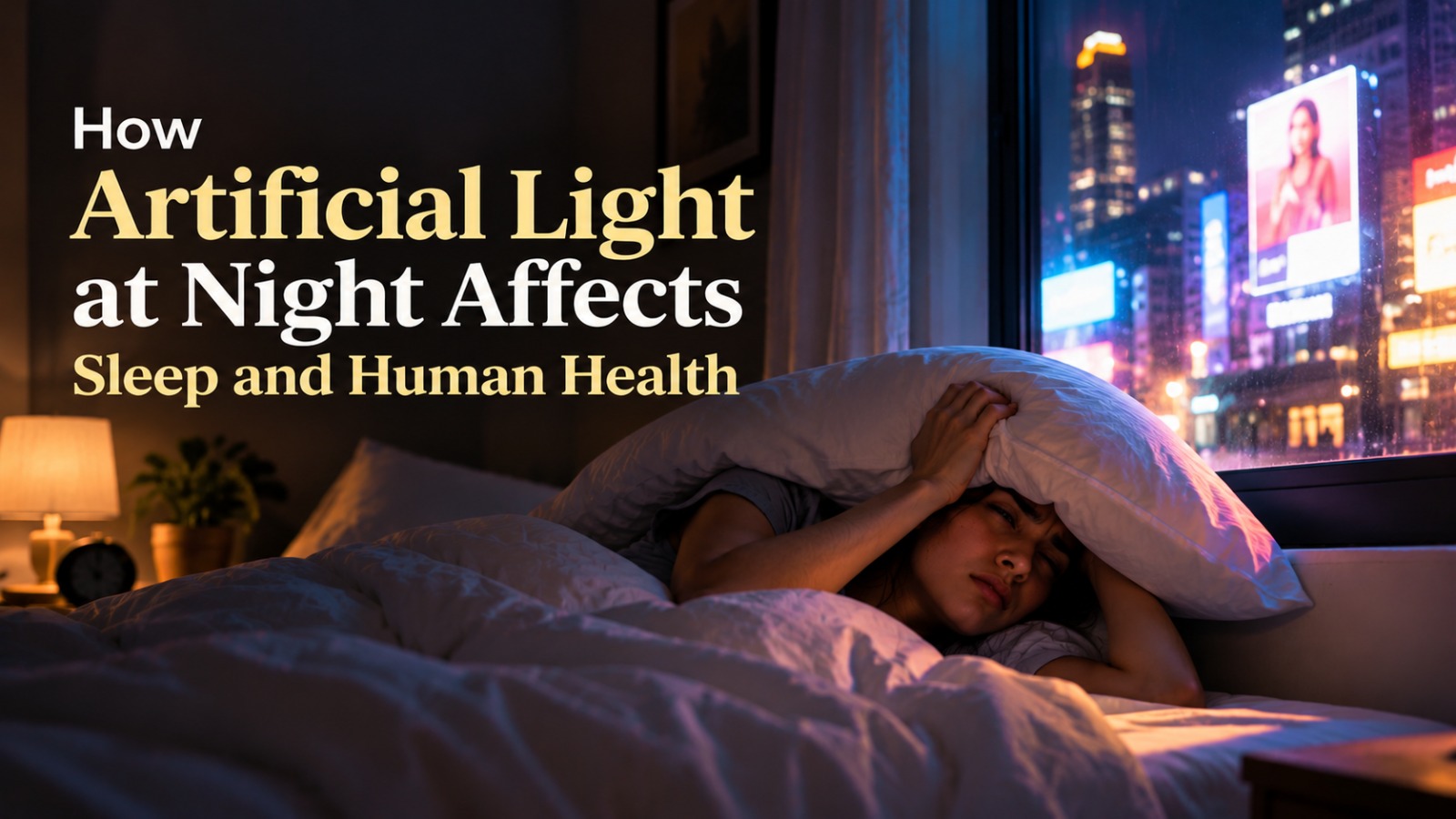
- Light Trespass: Light falling where it is not intended, wanted, or needed — such as a streetlight shining into a bedroom window or a commercial sign illuminating a residential area.
- Clutter: Excessive groupings of light sources, often found in commercial districts, that create bright, confusing, and distracting visual environments.
The Scale of the Problem
The numbers are sobering. More than 80% of the world's population lives under light-polluted skies. In India, rapid urbanization has meant that light pollution is growing faster than almost any other environmental problem. The Milky Way is no longer visible to most Indians living in cities and towns.
Global studies using satellite data show that the total area of artificially lit land is growing by approximately 2.2% per year, and the total amount of light emitted is growing even faster. Despite the energy efficiency of modern LEDs, we are losing the battle against light pollution because we are simply installing more and brighter lights.
Why It Matters
Light pollution is not a cosmetic issue. It has profound consequences across four domains:
Wildlife: Billions of insects die at artificial lights every night. Sea turtle hatchlings are disoriented. Migratory birds collide with illuminated buildings. Fireflies cannot find mates. The disruption cascades through entire ecosystems.
Human Health: Artificial light at night suppresses melatonin production, disrupts circadian rhythms, and is linked to increased risks of cancer, obesity, depression, and sleep disorders. The WHO considers night shift work a probable carcinogen.
Energy & Climate: An estimated 30-50% of outdoor lighting energy is wasted. This waste translates directly into unnecessary carbon emissions and wasted money.
Culture & Heritage: For millennia, the night sky has inspired art, philosophy, religion, and science. We are the first generation in human history to raise children who have never seen the Milky Way. This is a cultural loss of immeasurable proportions.
What Can Be Done?
The good news is that light pollution is one of the most reversible forms of environmental degradation. Unlike air pollution or deforestation, the moment you turn off an unnecessary light or shield a fixture, the improvement is immediate.
At the individual level: use warm-colored, shielded outdoor lighting; install motion sensors and timers; close curtains at night; and reduce screen time before bed.
At the community level: advocate for responsible lighting ordinances; conduct lighting audits; and support organizations like Save Darkness.
At the policy level: adopt outdoor lighting standards that require shielding, warm color temperatures, dimming, and curfews for non-essential lighting.
The stars are still there, waiting above the veil of skyglow. All we need to do is turn off the unnecessary lights and let the darkness return.