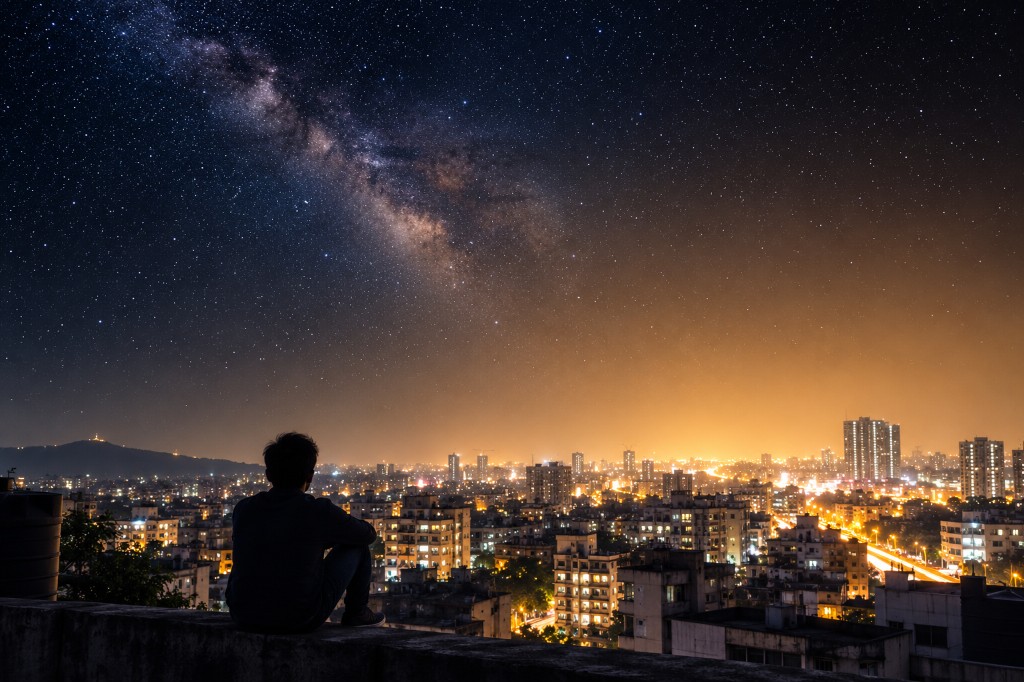

Look up tonight. How many stars can you count? For most of us, the honest answer is “not many.” A major study in Science Advances found that more than 80% of the world’s people live under light-polluted skies, and the Milky Way is hidden from over a third of humanity.
The good news is that you don’t need to be an expert to help. At Save Darkness, we’re working to fight light pollution and protect the night sky, and this blog shows you how to reduce light pollution at home with five easy steps, based on the Five Principles for Responsible Outdoor Lighting from DarkSky and the Illuminating Engineering Society. Most take only a few minutes.
Don’t worry about doing everything at once. Each step works on its own, so start with the one that feels easiest and add the rest over time.
Why Your Home Matters in the Fight Against Light Pollution
The glow above our cities is made of millions of small lights: porch lamps, balcony strips, gate floodlights. When that light shines upward or spills where nobody needs it, it becomes skyglow, glare and light trespass. So every home that fixes its lights makes a real difference. To see what this does to wildlife and sleep, read our posts on wildlife and human health.
How to Reduce Light Pollution: 5 Simple Steps to Follow
These steps follow one easy guideline: responsible outdoor light is Useful, Targeted, Low level, Controlled and Warm-colored. Try them one at a time.
A common worry is that darker means less safe. It doesn’t have to be. Poorly aimed, over-bright lights create glare and deep shadows that can hide hazards rather than reveal them, while well-aimed, lower-level light lets your eyes adjust and shows you what actually matters. The goal is not less light, but better light.
1. Keep only the lights you need
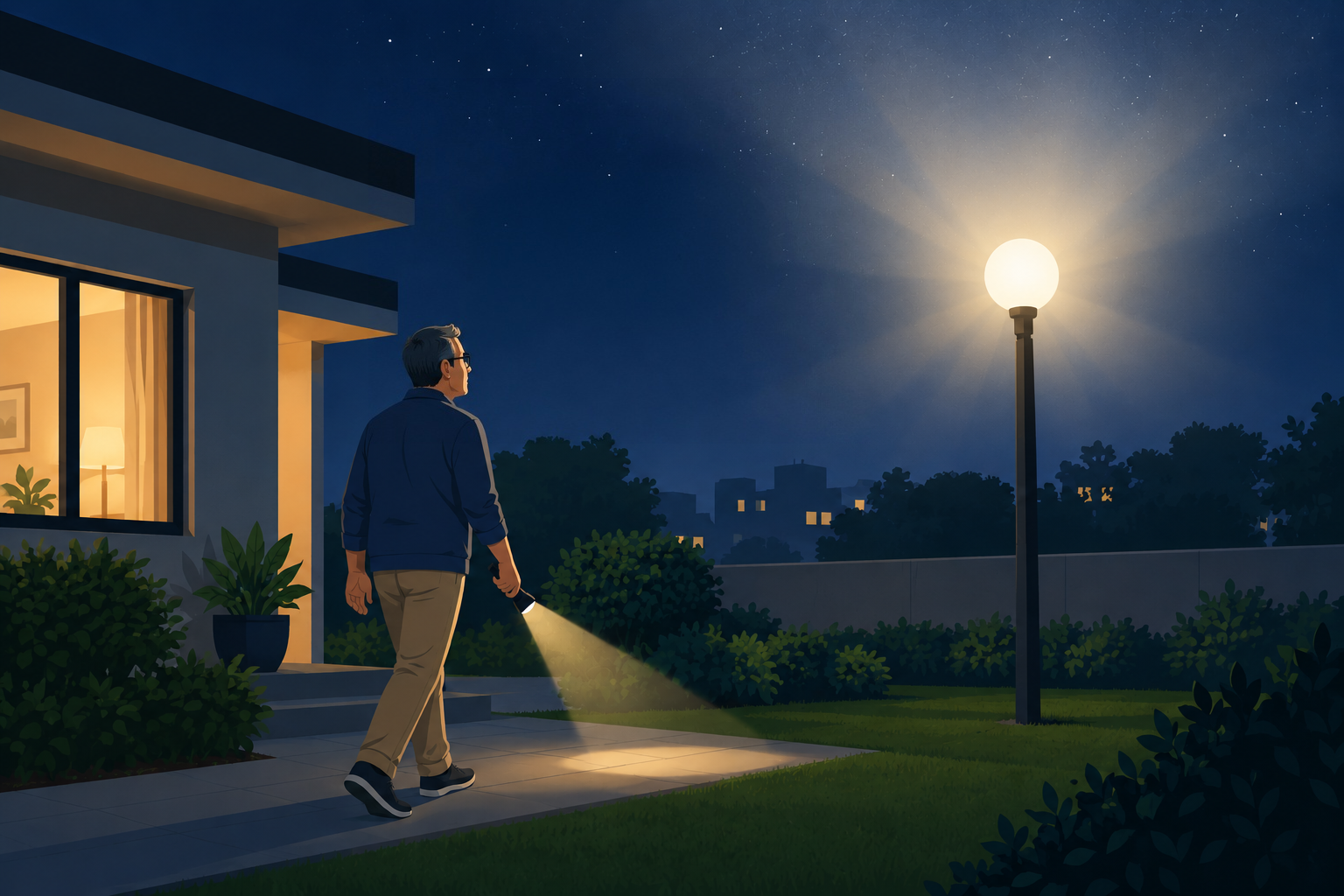
Walk around your home after dark and ask of every outdoor light: what is this for? If you can’t give a good answer, switch it off. Lights that shine on walls, trees or the sky don’t help anyone. For steps and gate numbers, reflective paint or markers can do the job without any power.
Over time, most homes collect lights that no one planned: a lamp left over from a festival, a floodlight installed “just in case,” a decorative strip that stays lit all night. Each one adds to the glow overhead without adding much value to the people below it. Reflective paint or self-luminous markers on steps, kerbs and gate numbers can often replace permanent lighting altogether, and it is worth considering nearby wildlife and habitats before adding any new light.
Easy ways to start:
-
Take a ten-minute walk around your home after dark and note every light you see.
-
Switch off lights nobody uses, such as lamps over empty corners or ones that light a blank wall.
-
Skip lights wrapped around trees. They can harm the tree and disturb nesting birds.
Why it helps: fewer wasted lights means a lower electricity bill, fewer bulbs to replace and a darker, calmer night. It’s also the cheapest step on this list, because it costs nothing.
2. Point light down, only where it’s needed
Choose shielded fixtures that send light downward, with no bare bulb visible from the side. Aim them at the path or door you want to see, not at the horizon. Then try the neighbour test: if your light shines into the street or a neighbour’s window, it needs shielding or re-aiming.
Light that escapes sideways or upward does no useful work. It lights the sky instead of the ground, and it is the main cause of glare and light trespass. A simple test is that you should never be able to see the bulb itself from a distance; if you can, the fixture is sending light where it shouldn’t. Fully shielded fixtures, which emit no light above the horizontal, solve most of this at the source. If you do need a floodlight, mount it low and aim it toward the ground.
Easy ways to start:
-
Look for fixtures with a hood or cover over the bulb, so light can only go down.
-
Replace open floodlights and clear globe lamps, which throw light in every direction.
-
Re-aim lamps you already own so they point at the ground, not outward.
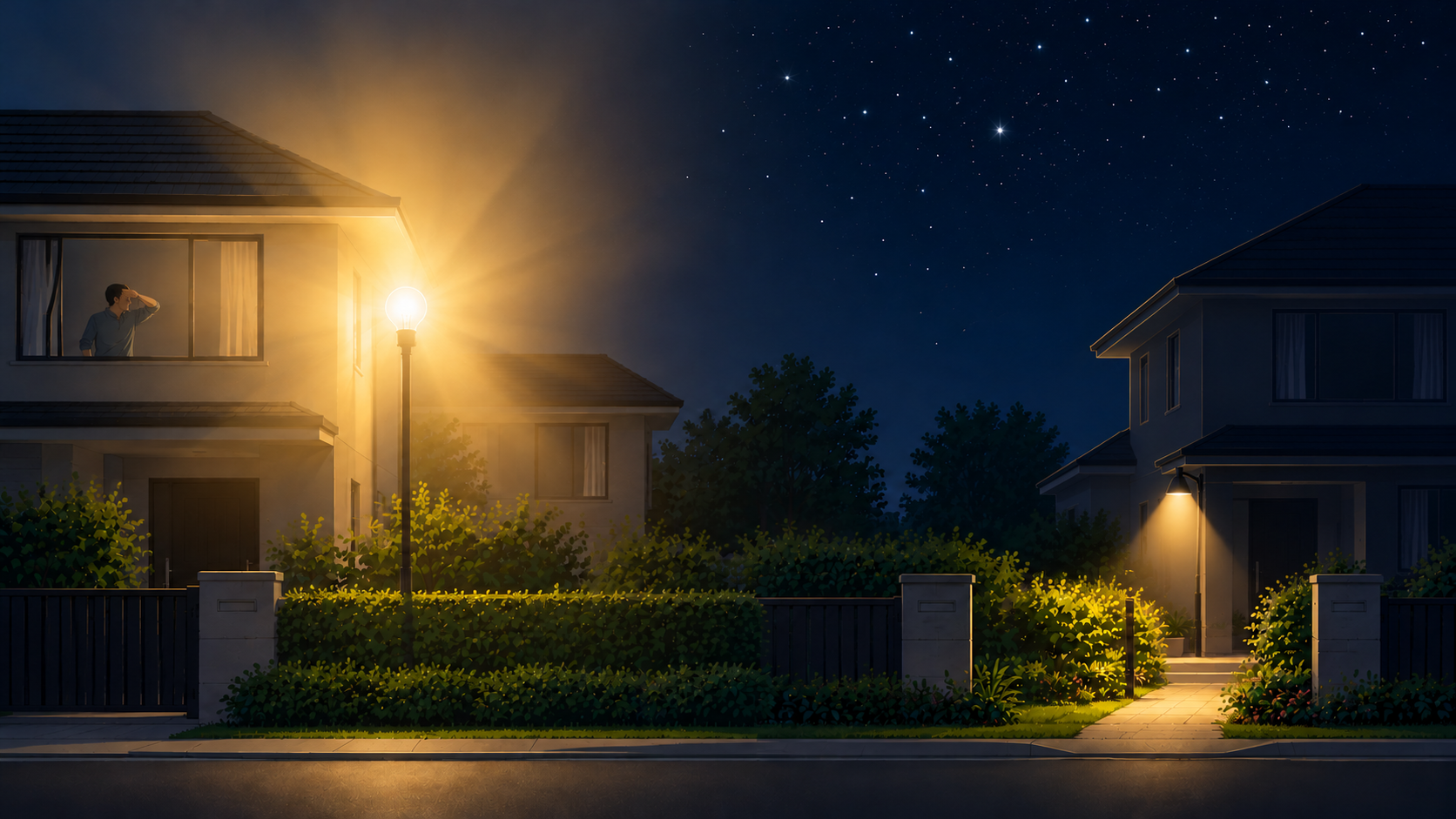
Why it helps: you see the path better, glare drops, your neighbours sleep better and the stars come back. Light that lands only where you need it is also easier on the eyes, because you aren’t staring into a glare.
3. Keep the brightness low
More light doesn’t mean more safety. Harsh light creates deep shadows and makes it harder for your eyes to adjust. Use the lowest brightness that lets you see safely: a garden path needs far less light than a parking lot. Dimmable LEDs make this easy.
Modern LEDs are so efficient that it is easy to buy far more brightness than a task needs. A doorstep or garden path rarely needs the output of a street lamp. Very bright lights against a dark background also make your pupils constrict, so everything outside the bright patch looks darker than it really is. That is why over-lighting can reduce visibility instead of improving it.
Easy ways to start:
-
Pick the lowest brightness that lets you do the job. If you can see well, it’s enough.
-
Use dimmable LEDs and turn them down further late at night.
-
Remember that light-colored walls and paving bounce light upward, so a small lamp can seem much brighter than it is.
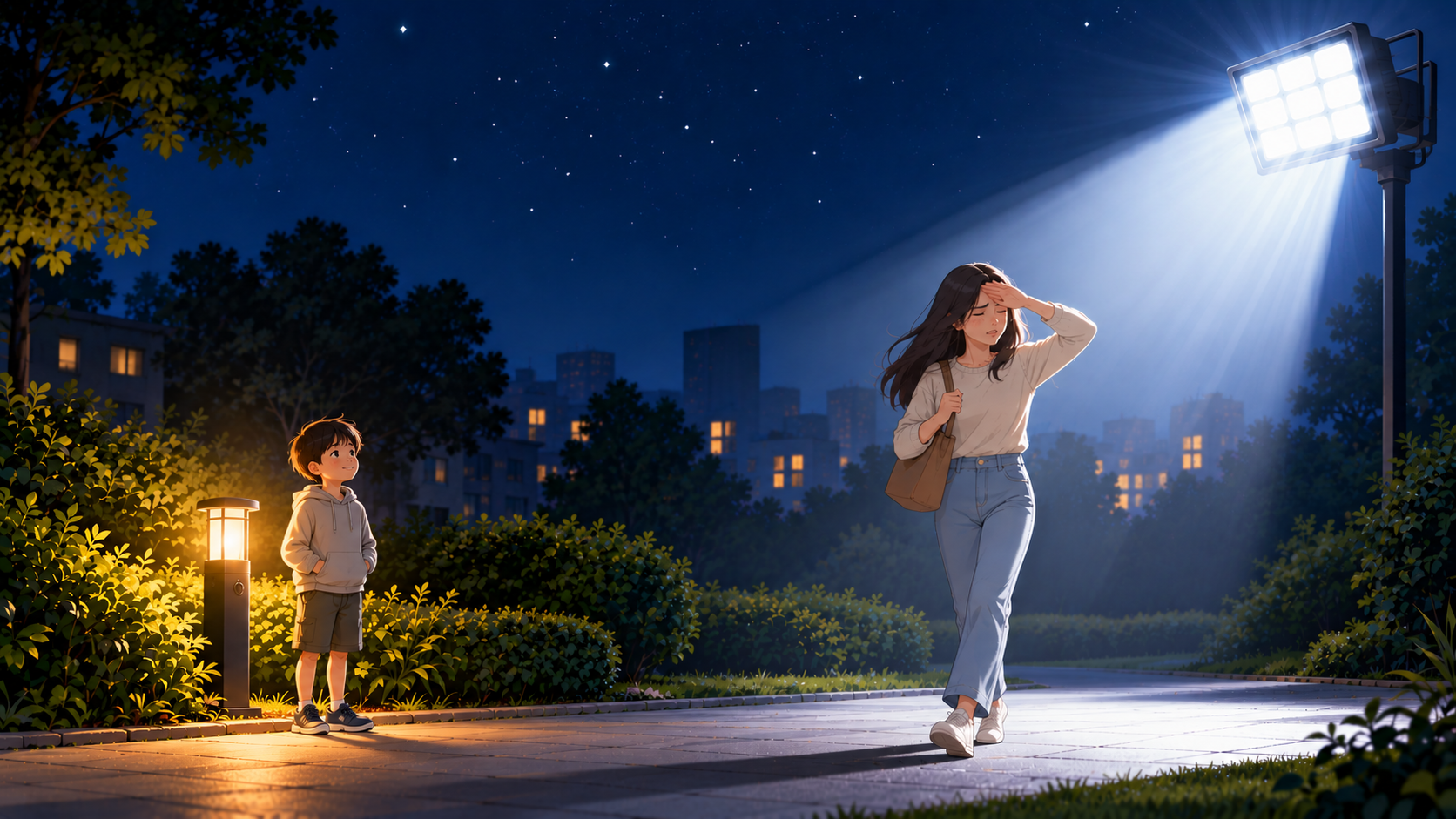
Why it helps: your eyes stay comfortable, glare is reduced and you use less electricity. Your eyes also adjust to the dark faster, so you notice more of the night around you, including the sky.
4. Switch lights on only when needed
Put lights on motion sensors, timers or dusk-to-dawn controls so they work only when someone is there. Switch off decorative and festive lights before you go to bed. A timer makes this effortless, especially in festival season.
A lamp that burns from dusk to dawn is working all night for a few minutes of real use. Controls fix this without asking anyone to remember anything: a motion sensor, a timer, or a dusk-to-dawn controller with a set shutoff time. Many outdoor fixtures now include these features, and a plug-in timer is an inexpensive way to add them to lights you already own. In a housing society, dimming common-area lights late at night, when few people are around, can cut energy use and skyglow while still keeping key areas lit.
Easy ways to start:
-
Fit a motion sensor on your gate, side passage or terrace.
-
Use a timer or dusk-to-dawn switch for lights you want on at set hours, and set it to turn off at bedtime.
-
Put festival lights on a timer too, so they switch off when you go to sleep.
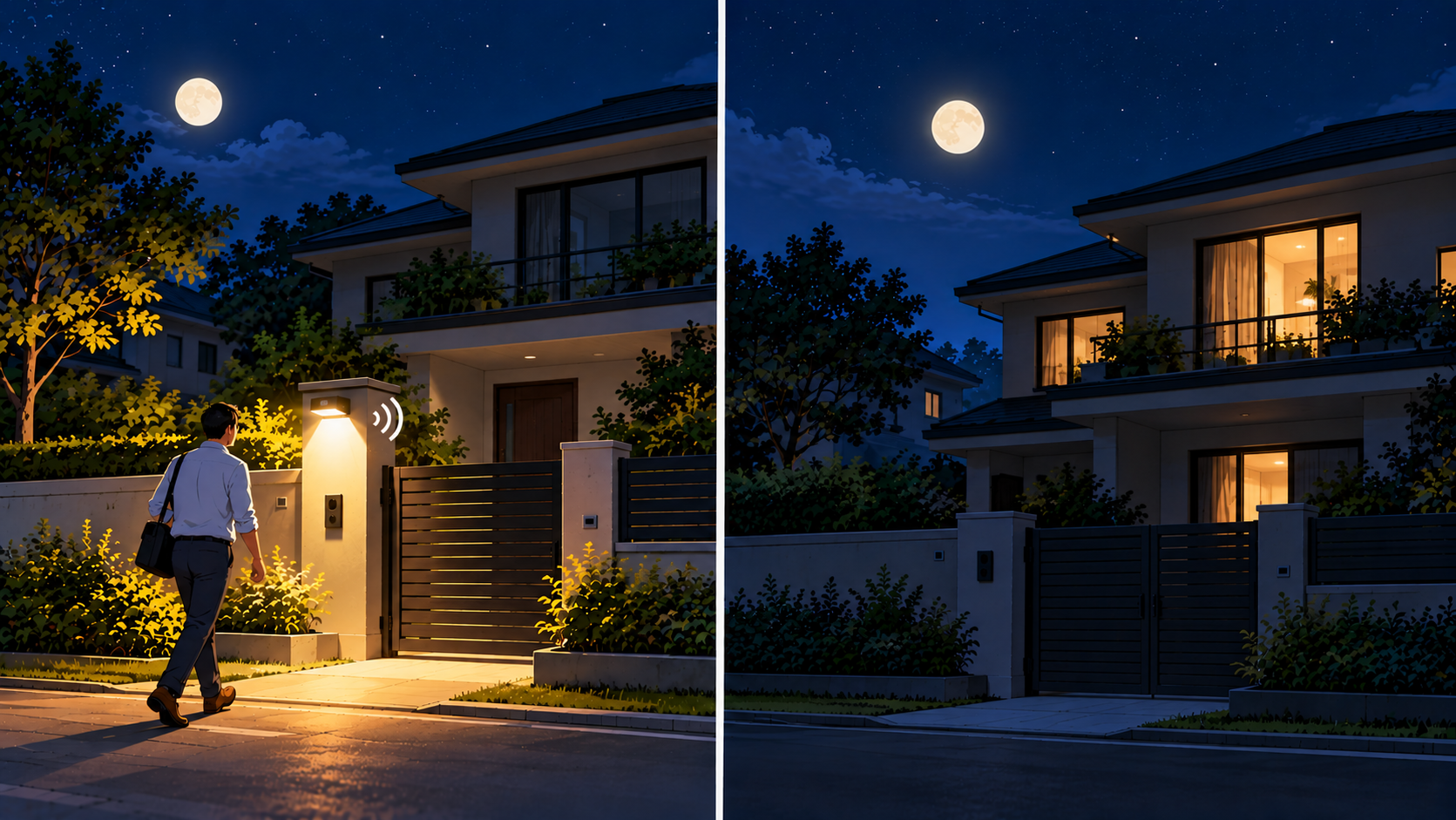
Why it helps: a light that is off can’t pollute, and you save power without having to remember to flip a switch. It’s also the easiest habit to keep, because the timer does the remembering for you.
5. Choose warm-colored light
Blue-rich, cool-white light scatters more in the sky and disturbs wildlife and sleep. Pick LEDs rated 2700K to 3000K or lower, and avoid “daylight” bulbs outdoors. Near coasts, nesting sites or gardens full of life, amber lights are even kinder.
Colour temperature is measured in kelvins (K): the lower the number, the warmer the light. Cool, blue-rich light at around 4000K and above scatters more in the atmosphere, which adds to skyglow. The number is printed on most LED packaging, so this is one of the easiest steps to get right the next time you buy a bulb. Our post on sleep and human health explains why the colour of night-time light matters for people too.
Easy ways to start:
-
Check the box or label for the color temperature, shown in kelvin (K), and choose 3000K or lower.
-
Avoid bulbs labelled “daylight” or “cool white” for outdoor use.
-
Use amber lights near coasts, gardens and nesting spots.
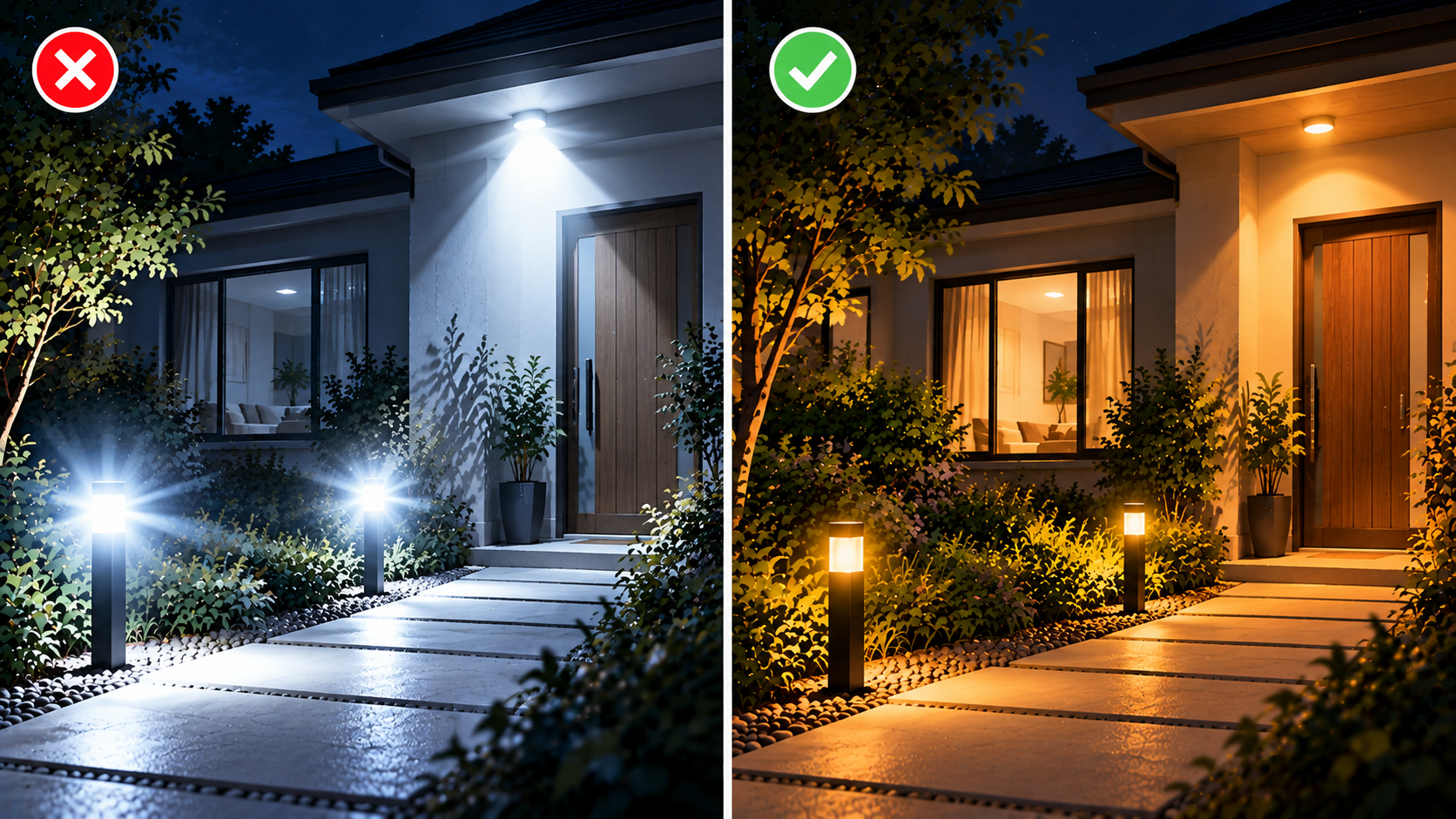
Why it helps: warm light is gentler on wildlife and on your own sleep, and it gives your home a softer, more welcoming glow than harsh white light.
From Home to Community: Public Participation Matters
One dark home is a start. A dark neighbourhood is a movement. Here is how to take it beyond your gate:
-
Talk to your neighbours. Many people don’t realise their light bothers anyone. A friendly chat goes a long way, especially if you offer to show them a shielded fixture.
-
Speak up in your housing society or RWA. Suggest timers, motion sensors or shielded fixtures for gates, parks and parking areas. Shared spaces are a great place to start, because one decision changes many lights.
-
Ask your local authorities for shielded, dimmable, warm-colored streetlights. Cities across India are already moving this way, with rules on flashing digital hoardings and advertising brightness.
-
Join a community lighting audit and help map over-lit spots in your area. It’s a free and fun way to be a citizen scientist.
-
Share what you did. Post your before-and-after and encourage friends, schools and workplaces to check their lights too.
Your Quick Home Lighting Checklist
Check every outdoor light at your home. Aim for five “yes” answers.
-
Useful? Does it have a clear purpose?
-
Targeted? Is it shielded and aimed down, with no spill onto neighbours or the sky?
-
Low level? Is it no brighter than needed?
-
Controlled? Is it on a sensor or timer, or switched off when not needed?
-
Warm-colored? Is it 3000K or lower?
Conclusion
Learning how to reduce light pollution doesn’t take expensive equipment. It starts with one question for every light you own: is it useful, targeted, low level, controlled and warm? Then it grows as you share that question with family, neighbours and your city. Better lighting isn’t about less light. It’s about better light, so wildlife can find its way, people can sleep well and children across India can still look up and see the stars.
You don’t have to do everything in one weekend. Start with step one tonight, add another next week, and within a month your home will be part of the solution. Every light you switch off, shield or dim is a small gift to the night. Save Darkness is an initiative to protect the night sky, and every home that joins in makes it stronger.